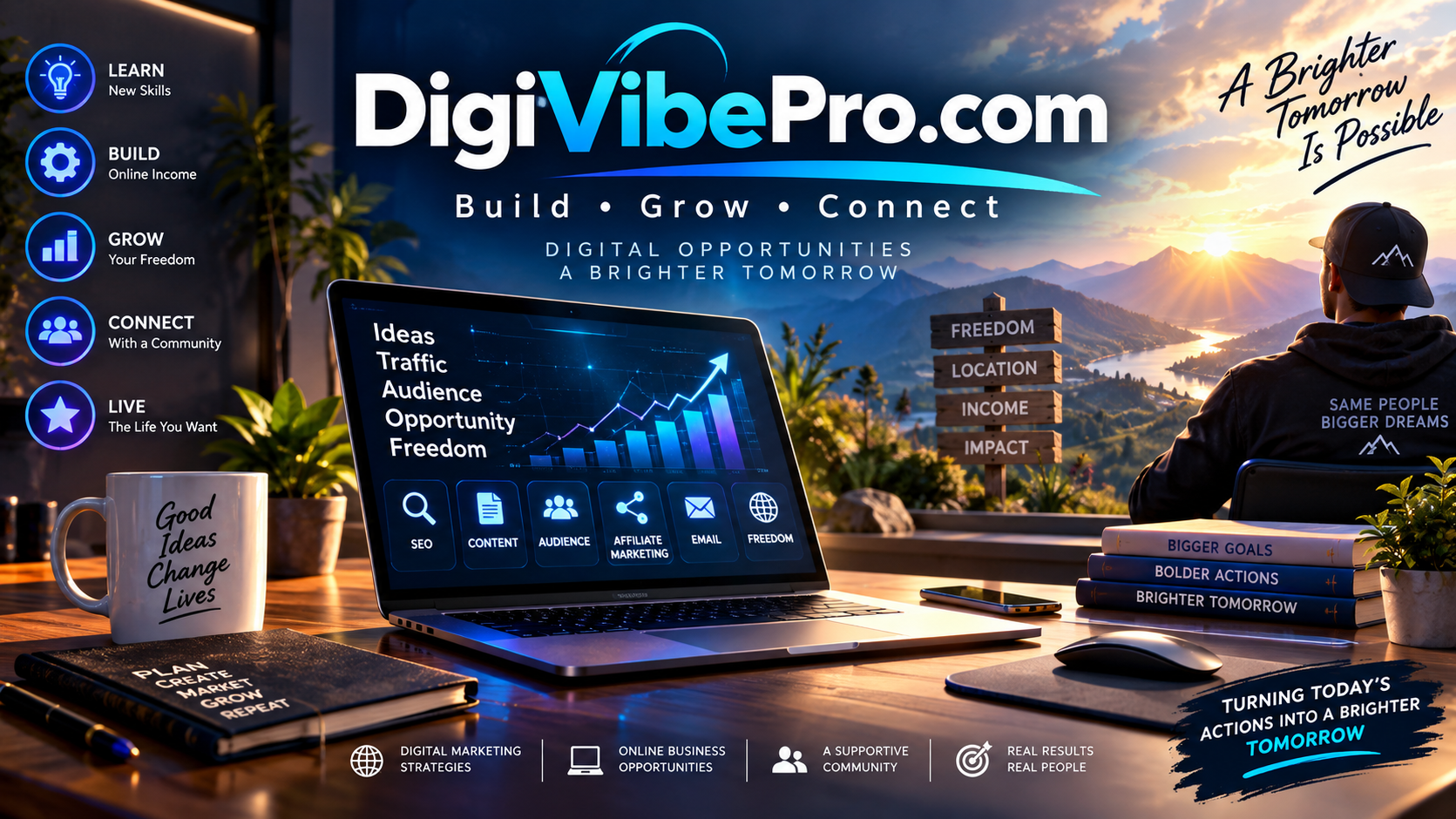
If you are new to digital marketing, the first problem is the number of options. Search engines, YouTube, Instagram, TikTok, newsletters, paid ads, podcasts, and influencer deals all get described as essential, usually by people selling a course on each one. Digital marketing for beginners gets easier once you stop trying to understand all of it and choose one channel to work on.
This guide helps you make that choice. It covers what the field is, the five channels you will meet first, and how to pick one using your goal, your time, and your budget. It also lays out a realistic first 30 days and the mistakes that cost beginners the most time.
What digital marketing actually is, in plain words
Digital marketing is getting the right people to notice something you offer, through the internet, and giving them a reason to act. The thing you offer might be a product, a service, a blog, or a recommendation for someone else’s product. The action might be a purchase, a click, an email signup, or a message.
Every channel does the same three jobs in a different way:
- Attention: a stranger sees something of yours, such as a search result, a video, a post, or an ad.
- Trust: they find that what you say is useful and consistent enough to keep reading or watching.
- Action: they do the thing you hoped for, whether that is subscribing, buying, or clicking a link.
Once you see those three jobs, the channels stop looking like separate subjects. A blog post, a short video, and an email are different tools for getting attention, building trust, and prompting action. What changes between them is where your audience is, how fast results come, and what it costs you in time or money.
Why trying every channel at once is the beginner’s trap
A new marketer who sets out to post on five platforms, start a blog, build an email list, and run ads is dividing a small amount of time into very small pieces. Each channel has its own tools, its own formats, and its own unwritten norms. Learning one properly takes weeks. Learning five at once means you stay at beginner level on all of them.

There is also a feedback problem. Marketing improves through a loop: you publish something, look at what happened, change one thing, and publish again. With one channel, you can see what caused a result. With five, a small amount of activity is spread so thin that you cannot tell what worked, so you cannot improve anything on purpose.
Switching has a cost too. Beginners often drop a channel after two weeks because nothing has happened yet, then start another and repeat the cycle. Most channels need a few weeks of steady output before the first useful signals appear, and a search-based blog usually needs longer than a social account. Leaving early means you never see the part where the data starts to mean something.
One channel for a fixed period removes these problems. You learn one set of tools, you can read the results, and you finish with a skill you can use again.
The five channels beginners meet first
Almost every beginner path starts with one of these five. Each is described here by what it asks of you, because that is what matters when you choose.

Search (SEO)
Search engine optimization means writing pages that answer questions people type into Google or other search engines, so your pages appear when they search. The people who find you are already looking for something, which makes them useful visitors. The trade-off is time: a new site generally takes months to earn steady search traffic. It suits people who like research and writing and can keep going without quick feedback.
Content (blog, video, podcast)
Content is the material itself: articles, videos, or audio that teach or entertain. It overlaps with search, because a blog post is content that can also be found through search, and a YouTube video is content on a platform that has its own search. Content builds trust well, since people see how you explain things before they ever buy. It asks for regular production and a willingness to improve in public.
Social media
Social platforms let you reach people who were not looking for you, through short posts, images, and video. Feedback is fast: you can see within days which posts got attention. The downside is that a post has a short life, so you need to keep producing, and each platform favors a different format. It suits people comfortable showing up regularly, on camera or in writing.
Email marketing means collecting addresses from people who agree to hear from you and sending them useful messages. You own the list, so no platform can change the rules on you. But a list needs people to join, which means you need some other source of attention first. Email is usually a second channel rather than a first, unless you already have an audience somewhere.
Paid ads
Paid advertising means paying a platform to show your message to a chosen audience. It is the fastest way to get attention, because you do not have to earn it over months. It is also the only channel where a beginner’s mistakes cost money immediately. It suits people with a small testing budget they can afford to lose and an offer ready to sell.
How to choose your first channel using your goal, your time, and your budget
Three questions narrow the five channels to one. Answer them in this order.
1. What is your goal?
Be specific about what you want from the first few months.
- Build a long-term asset, like a site that brings in visitors: search or content.
- Practice quickly and learn what people respond to: social media.
- Sell something that already exists and needs buyers now: paid ads, with care.
- Keep in touch with an audience you already have: email.
2. How much time do you have each week?
Be honest about this number, because the plan has to fit a normal week, not your best one. If you have around three to five hours, pick a channel where one focused session produces something finished, such as one article or a few short posts. If you can give ten or more hours, a channel with heavier production, such as video, becomes realistic.
3. What can you spend?
If your budget is zero, use search, content, or social media, which cost time instead of money. If you can spare a small amount, you can add basic tools, but you do not need paid software to begin. Paid ads need a budget set aside purely for learning, which you accept may produce little in return at first.
Putting the answers together
Most beginners with a long-term goal, limited hours, and no budget end up at search or content, because those cost only time and keep working after you publish. Someone who wants fast feedback and is comfortable posting regularly may do better starting with social media. Both are reasonable. What matters is that you choose one and commit for the full 30 days.
A realistic first 30 days on a single channel
The plan below is generic on purpose. Adapt the tasks to your channel, but keep the sequence.
Week 1: set up and study. Choose your channel and a narrow topic within your niche. Create the account or site you need. Spend a few hours looking at ten examples of what already works in that channel and write down what they have in common: format, length, headline style, how they end. Do not publish yet unless you want to.

Week 2: publish your first pieces. Make and publish a small set of items, for example two articles, five short posts, or two videos. They will not be good. The aim is to move through the whole process once, including the tools, the editing, and the publishing, so each later piece goes faster.
Week 3: publish and look. Make another batch and open your analytics, whether that is a search report, a platform dashboard, or a spreadsheet you keep yourself. Note which piece got the most views or responses and guess why. Change one thing in the next batch, such as a headline style or a posting time, so that you can compare.
Week 4: repeat and review. Publish a third batch with what you learned. At the end of the week, write a short review: how many pieces you published, what the best one had in common with the others, what took longest, and what you would drop. That page is the real product of the month, since it tells you whether this channel suits you.
A realistic outcome after 30 days is a small body of work, a working routine, and a few early signals. Do not expect income. Any plan that promises money in the first month is selling something.
Mistakes beginners make and how to spot them early
Adding a second channel in week two. The sign is that you are opening a new platform account before the first has a dozen finished pieces. Write the second channel on a list and leave it there until the month is over.
Judging results too early. The sign is a decision to quit based on three days of numbers. A tiny audience produces noisy data, and one post with no views says very little. Judge the month, not the day.
Copying instead of studying. The sign is that your work looks like someone else’s with the names changed. Study examples to find patterns, then apply those patterns to your own topic and opinions.
Picking a topic that is too wide. “Marketing” or “health” gives you no one in particular to write for. A narrower topic, such as a specific tool, a specific type of reader, or a specific problem, makes every piece easier to write and easier for the right person to find.
Spending before you have learned. The sign is buying a tool, a template pack, or an ad budget in the first week. Most early work needs nothing beyond a free tool and a notebook. Spend only when a specific limit is slowing you down.
Skipping the review. The sign is that at day 30 you cannot say what worked. Without the written review, a month of effort leaves you with the same questions you started with.
What to do after the first month
On day 30, read your review and choose one of three paths. If the channel suited you and you saw early signals, continue for another 60 to 90 days with the same routine and improve one variable at a time. If you disliked the work itself, switch channels and run the same 30-day plan again, since you now know the process. If you want to add a second channel, do it only when the first one runs on a routine that takes much less effort than it did in week one.
Whichever you choose, you will get more from structured teaching once you have a real channel to apply it to. The free starter course covers the fundamentals of digital marketing, and it makes more sense when you have already published a few pieces and have questions from doing so. Treat it as the material that fills the gaps your first month exposed.
Take the next step with the Digital Marketing Free Starter Course and work through it using the one channel you chose.