
Content marketing fundamentals come down to one test you can apply to every page you publish. Each piece should be tied to a specific reader problem, sit at a known stage of the buying journey, and point to a measurable next action. A post that meets all three has a job in your business. A post that meets none of them is a diary entry.
This matters most if you already publish regularly and cannot say what the content is doing for you. The fix is rarely more posts. It is a small system that decides what to make, where it fits and what the reader does afterwards. If you are still choosing a direction, digital marketing for beginners covers the starting point. This article assumes you are already publishing and want the work to add up.
Why most content gets read once and changes nothing
A typical post is written because the topic seemed relevant. A reader finds it, gets a partial answer and leaves. Nothing on the page invites a second visit, and nothing connects it to the next thing the reader would need. The visit is counted in your analytics and then forgotten.

Four gaps explain most of this:
- The topic is broad. “Email marketing tips” does not name a person or a problem, so the piece cannot be better than the dozens already covering it.
- The stage is unclear. The post is too basic for someone ready to buy and too sales-heavy for someone who has just discovered the problem.
- There is no next step. The article ends, and the reader has nowhere to go.
- Nobody checks the result. Without a record of what each piece was meant to do, you cannot tell which ones did it.
Each gap has a direct fix, and the sections below take them in order. Before publishing anything, write three lines for the piece: the reader’s problem, the stage, and the action you want the reader to take next. If you cannot write those lines, the piece is not ready to be written.
Start with one reader and one problem you can solve better than the pages already ranking
Describe one reader in a single sentence, in terms of what they are trying to do and what is stopping them. “A solo blogger who publishes weekly and cannot tell which posts bring in email subscribers” is specific enough to write for. “Anyone interested in marketing” is not.
Then list the questions that reader asks. Good sources are the autocomplete suggestions and “People also ask” boxes on a search engine, the questions posted in forums and groups where your readers gather, and the comments and replies on posts by established creators in your niche. Write the questions in the reader’s own words, because those are the words they type into a search box.
For each question, search it and read the top results. You are looking for a gap you can fill:
- The answers are general and give no steps.
- The advice assumes knowledge a beginner lacks.
- The examples are missing or clearly out of date.
- The page answers a neighbouring question and skips the one that was asked.
- The page sells something before it helps.
“Better” means more useful to your specific reader. It does not mean longer. A page that gives a beginner a numbered process and one worked example can outperform a longer page that surveys ten opinions. Pick the problem where you can see a clear gap, and write that piece first.
Match each piece to a stage: discovery, consideration, decision
Readers move through three stages, and each needs a different kind of page.

Discovery. The reader has a problem and may not know what solutions exist. They search for symptoms: “why do my blog readers never come back.” Pieces here explain the problem and show that solutions exist. The next action is light: read a related guide or subscribe for more.
Consideration. The reader knows the solution types and is comparing them. They search for “newsletter vs social media for a small blog” or “best way to track affiliate clicks.” Pieces here compare options, set out trade-offs and help the reader decide which approach suits their situation. The next action is a deeper step, such as a checklist download, a tutorial or a product comparison.
Decision. The reader has chosen an approach and wants to carry it out or pick a tool. Pieces here are step-by-step setups, reviews and walkthroughs. The next action is the one your business exists to produce: joining your email list, taking a course, or clicking through to a product you recommend.
It is easy to fill a site with discovery pieces because those topics come to mind first. They bring visitors, but visitors who never meet a consideration or decision page have nowhere to go. Check your existing posts against the three stages and count them. A gap at consideration or decision is usually the cheapest place to add value, because the readers in those stages are closer to acting.
Choose formats and channels by where your reader already looks, not by what is trendy
Pick the format and channel by looking at how your reader seeks the answer. Several habits suggest different choices:
- A reader who types questions into a search engine is best served by a written article that answers the question directly.
- A reader who needs to see a task done on screen, such as setting up an email form, is served well by a video that shows each click.
- A reader who already knows you is reached most reliably by email, because it does not depend on an algorithm showing your post.
- A reader who asks questions in a community is reached by a helpful, specific answer there, with a link to a fuller guide only where the rules of the community allow it.
To find out where your reader looks, watch where they ask. Search your core questions and note which result types appear: articles, videos, forum threads. Read the places where your audience talks to each other. Look at which formats the people already serving your reader publish most consistently.
Start with one primary format and one way of getting it in front of people. A beginner who publishes articles and shares each one with an email list is running a complete system. Adding a second format makes sense after the first runs reliably, and the repurposing section below shows how to add one without starting from nothing.
Build a simple publishing system you can keep up for six months
Content compounds slowly, and most of the benefit goes to people who are still publishing in month six. The system has to be small enough to survive a busy week.
Set a cadence below your ceiling. If you could manage one piece a week on a good week, commit to one every two weeks. Twelve pieces in six months that each did their job beat a burst of ten followed by silence. Weekly publishing gives about 26 pieces over the same period, so choose whichever number you will actually hit.

Keep one content log. A spreadsheet is enough. Give each piece a row with these columns:
- Title and URL
- Reader problem
- Stage (discovery, consideration or decision)
- Next action you want the reader to take
- Publish date
- Pages it links to and pages that link to it
- Review date
Use the same workflow every time. Write the three-line brief, draft, edit, publish, add the links, and record the piece in the log. A repeatable order means you spend your effort on the writing and not on deciding what to do next.
Plan from a list, not from inspiration. Keep a running list of reader questions with a stage marked on each. When it is time to publish, take the next question that fills the thinnest stage. Review the log at the end of each month and at 90 days for each piece.
Connect content to growth: internal links, offers and a clear next step on every page
A page by itself reaches only the people who land on it. Links and offers let one page feed the others.
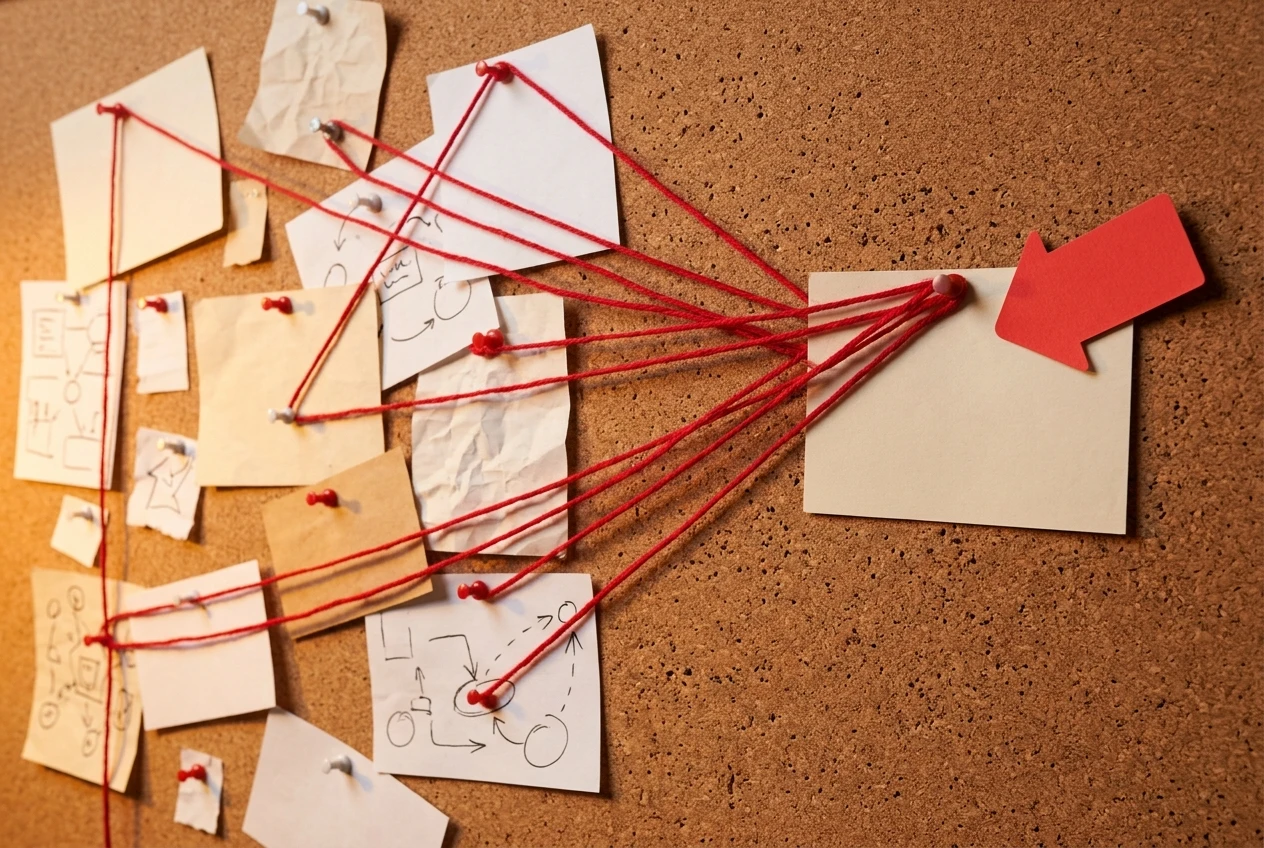
Internal links. When a post mentions a concept you have covered elsewhere, link to that page using words that describe it. Discovery pieces should link to related consideration pieces, and consideration pieces should link to decision pieces. That path leads a reader from a problem to a solution without searching again. It also gives search engines a clear picture of how your pages relate; the search side of this is covered in SEO for bloggers.
Offers. An offer is whatever you want the reader to do at the end of the path: join a list, download a resource, buy a course or use a product link. Make the offer match the stage. A discovery reader is rarely ready to buy, so offer something small, such as a related guide or a newsletter. A decision reader can be offered the product or service directly. If your offers are affiliate products, how to be successful at affiliate marketing explains how to build income around recommendations that hold up over time.
One clear next step per page. Choose the single action that fits the page’s stage and make it easy to find, usually near the end of the piece and once earlier where it fits naturally. A page that offers six choices usually produces none. Write the next step as a plain sentence that says what the reader gets and why it follows from what they just read.
Measure what matters: the few numbers that tell you what to make more of
You do not need a dashboard of thirty metrics. A few numbers answer the question of what to make more of. Use whatever analytics tool your site already has, plus click tracking on your next-step links.
- Visits from the source you are targeting. For a discovery piece, this is mostly visits from search or from the channel you shared it on.
- Next-step clicks. The number of readers who clicked the link you placed at the end, divided by visits to that page. This tells you whether the page does its job.
- Pages per visit or return visits. These show whether readers move along your internal links and come back.
- Conversions. Email sign-ups, course enrolments or affiliate clicks, counted against the page that led to them.
Compare pieces within the same stage, not across stages. A discovery post with high traffic and a low next-step rate is normal. A decision post with modest traffic and a high next-step rate may be your most valuable page.
Give each piece time before judging it, as search traffic to a new page can take weeks to arrive. At each review date, apply a simple rule. If a page has traffic but few next-step clicks, change the next step or improve the ending. If a page has strong clicks and low traffic, promote it and link to it from more pages. If a type of piece keeps producing clicks, schedule more of that type.
Turn one strong piece into several without repeating yourself
When a piece performs, you already know the reader cares about its problem. A strong guide almost always contains several smaller questions, and each can stand on its own.
Take a guide on setting up a welcome email sequence. Inside it might be a separate question about how many emails to send, another about what the first message should say, and another about how to measure whether the sequence works. Each of those can become its own shorter post for a different reader at a different stage. Each links back to the original guide as the full version.
Several routes give new pieces that are not copies:
- Split by question. Pull one sub-question out and answer it in depth.
- Shift by stage. Turn a discovery explanation into a consideration comparison or a decision walkthrough on the same topic.
- Change the format. Record a screen walkthrough of a step you described in writing, or send the core idea to your email list as a short lesson.
- Add new evidence. Update the original with a worked example or a result from your own measurements once you have real ones, and tell the reader what changed.
The test for each derivative is that it answers a question the original did not answer in full, or reaches the reader in a place the original did not. If it only restates the same paragraphs in new words, skip it and make something new from your question list.
Put these fundamentals to work with the Digital Marketing Free Starter Course, which takes you through them step by step.